

We will always remain vehemently opposed to the state laws that allowed discussions of a data center in Halifax County to remain in the dark until an August 17 public notice.
Before the county attorney shoves a wad of statutes down our throats, we understand the laws that kept this shrouded. That doesn’t mean we have to respect them, because we certainly don’t.
These discussions remained in darkness even after the board of commissioners approved the land sale at a meeting last November.
It was a story we reported — its perceived benefits and all. Yet the lead is always the same: Because of these laws that protect companies and give public officials an easy excuse to decline comment, we are left having to write “an undisclosed company.”
No one spoke at the public hearing before the sale was approved because they, like us, only knew it was an undisclosed entity — all due to statutes that leave the public outside the veil of closed session.
In January, Governor Josh Stein celebrated the designation of the Highway 301 Industrial Park outside Enfield as a state Select Site. This is where Quiet Data Centers Halifax will be located and where Binderholz operates.
By that time, Halifax County had already entered into an economic development agreement with QDCH, yet the public still knew nothing about what had been happening behind closed doors since 2024.
On May 29, we received an email invitation from the Halifax County Economic Development Commission, which was coordinating a June 4 visit to the South Hill/Boydton area.
“This visit is a part of our ongoing efforts to help our leadership understand data center development including infrastructure, the tax base, workforce considerations, land use planning, utility requirements, and long-term economic development opportunities,” the invitation said. “This trip is also an opportunity for Halifax County leaders to gather information, ask questions, and better evaluate how this sector may fit into the county’s future economic development.”
In retrospect, the troubling part about this email was that the county had already signed an EDA.
We believe there must be modifications made to these stringent laws. We call on our state legislators to at least look at fine-tuning them to a point where, once a land sale or incentive package is approved, the name and nature of the business must be disclosed.
That would also include allowing public inspection of environmental impact statements and load capacity reports, which Roanoke Rapids resident Ephraim Brodsky was denied with hostility in our estimation.
These are revisions that could possibly restore the public’s trust in local government, even if it risks scaring off a potential industry.
We’re not saying that is the kind of company QDCH will be. But we believe any company worth its salt should be willing to face the public in an open forum before the fact, rather than after the deal is already done.
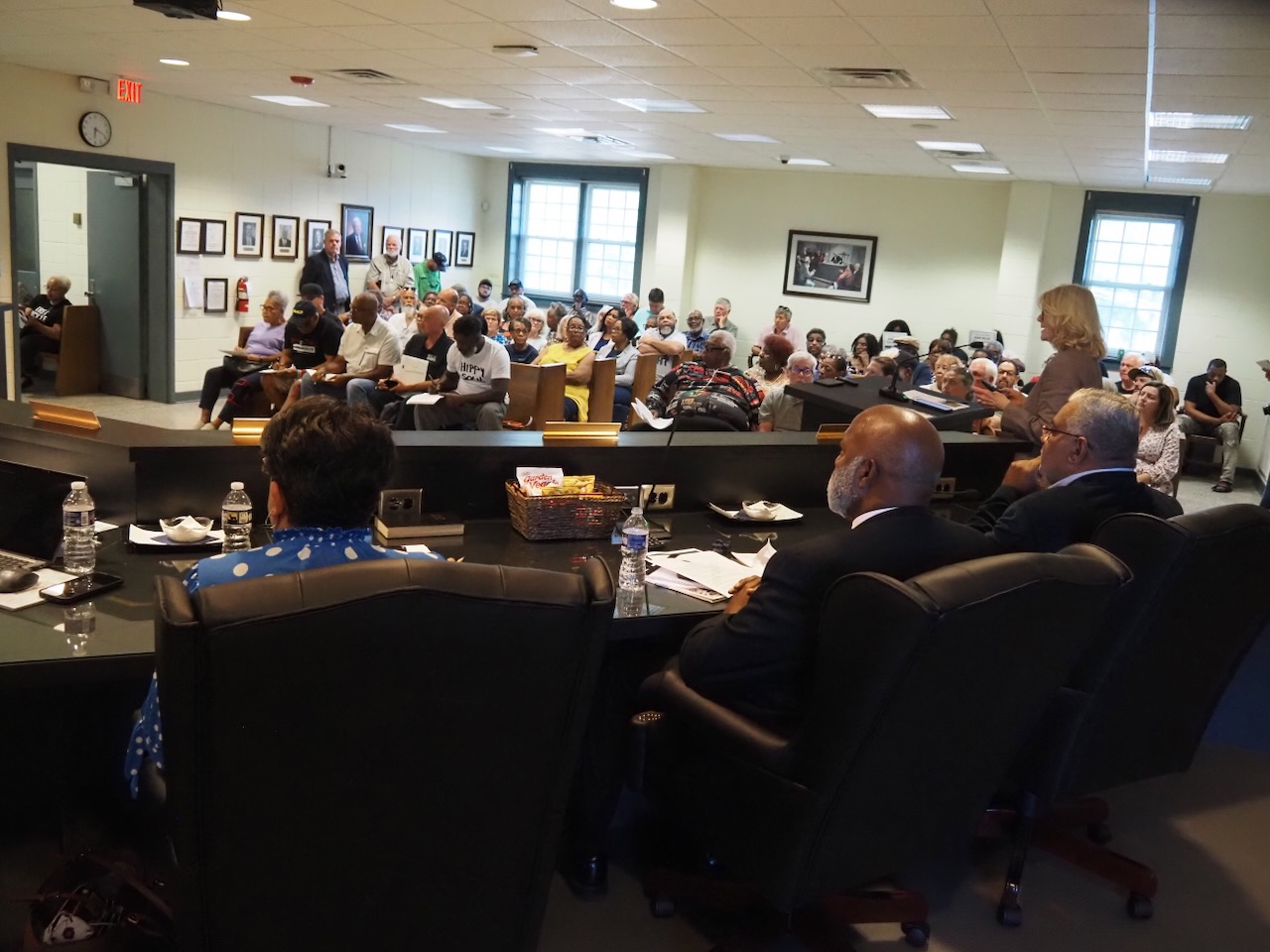
Commissioners technically weren't even required to hold a public information meeting Tuesday night under these same statutes. Essentially, the public wasted more than two hours of their time to have three minutes to air their questions and concerns to a board that intends to close the deal by September 18.
While it is a different situation, look at the straightforward approach Halifax Aggregates displayed in the public forums it held. Company representatives met the public head-on, explained what they wanted to do, and never flinched when the tough questions were asked.
While we take no stance here on aggregate mining so close to the Halifax-Northampton Regional Airport, we can say with certainty that the company showed true moxie by hosting its own forums.
And the harsh reality for the planning board and county commissioners is that Halifax Aggregates will eventually be back. The company has already filed a rezoning request to operate a quarry and will most likely arrive armed with statutes of its own — statutes that may force local boards to vote yes or face legal consequences.
Since all the communications with QDCH were held in secret, we can’t say whether any of the commissioners or other department heads privy to those talks spoke up and nudged the company to meet the public beforehand or just decided to stay curled up in a comfy quilt of closed session privilege.
We hope from this point forward, there will be at least one brave commissioner who tells these corporate officials that it would be a good idea to hold public forums like Halifax Aggregates did to dispel the myths surrounding their operations and explain the truth.
The public was blindsided by Tuesday’s meeting and many had questions. To our knowledge, there was no offer of a press conference leading up to the meeting, and since the notice was sent out on August 17, there was ample time to schedule one.
There are still nagging questions we have about the EDA, most notably the one about the penalty if the company fails to create the 50 promised jobs.
It’s only $2,500 per job per year — totaling just $125,000 annually against a $250 million project and a $1.7 million land transfer. Is that an economic deterrent?
Another question falling under Section 12.4 is that the EDA states closing depends heavily on power agreements and utility load studies. What assurances does the county have that the grid capacity required for this project will not constrain local energy reliability or shift infrastructure costs onto residents?
We’re still waiting for answers.
It’s like Enfield resident Sarah Brinker told the board, “If we move forward with this, you know we set a precedent and I think it’s absolutely critical that Halifax County’s standard is above and beyond anybody else. We need to make sure we’re looking out for our county. These guys have plenty of money and we need to be asking for the moon.”
And we need to ask our state legislators to change some of these provisions that leave residents in the dark — provisions that we will continue to oppose — Editor