

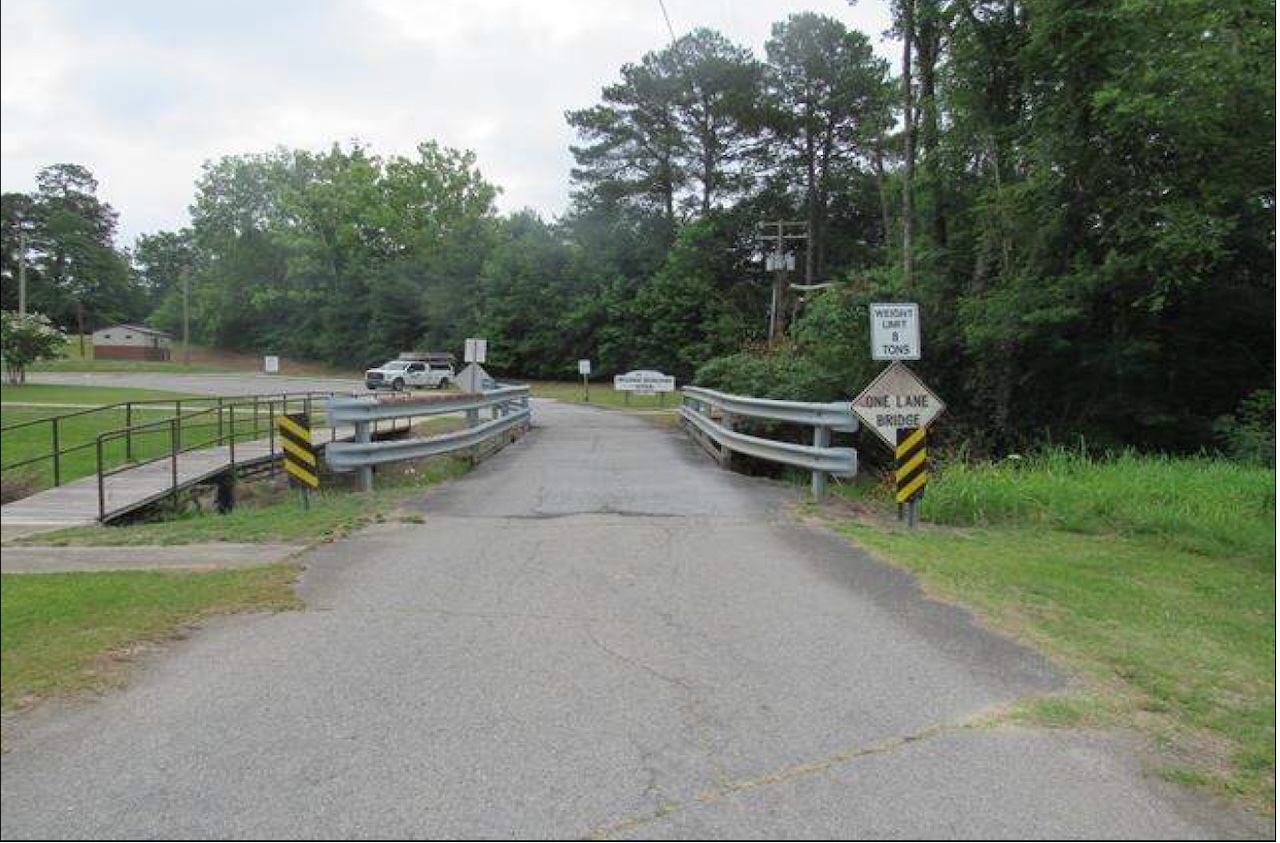
Roanoke Rapids City Manager Kelly Traynham expects the council to address an engineering proposal that focuses on repairs to the bridge that leads to the Chaloner Recreation Center.
She said in her report Tuesday that the city received a proposal from Wetherill Engineering that would satisfy the state Department of Transportation and Federal Highway Administration’s timeline requirements while trying to slow the deterioration rate of the bridge over Chockoyotte Creek.
The proposal is a lump sum of $16,035 for engineering services related to bridge repair.
The scope includes design and construction administration services, and the fee is valid for three months. It includes direct costs and travel expenses. "This lump sum fee includes the production of repair plans and details, construction documents, bid assistance, and construction inspections."
The one-lane bridge currently has a weight limit of 8 tons. Wetherill recommends lowering the weight limit to 5 tons and, until repairs are made, posting signs that say "no buses or trucks allowed."
Traynham told the council that if it wishes to repair the bridge, the first step is to consider the allocation of funding to pay for the repair plan services. A budget amendment will be needed since funding for the project is not included in this year’s budget.
State Representative Rodney D. Pierce had requested a $500,000 appropriation in this year’s state budget, but his request was not funded.
The bridge provides the sole access to the Chaloner Recreation Center, Pierce said, and has failed recent inspections. He noted in his documentation that the bridge is at risk of closure by state and federal authorities. "Replacement of the bridge is critical to maintaining safe public access to recreational facilities, preserving community programming, and ensuring continued use of a key local asset."
NCDOT has stated that the superstructure is in poor condition and there are moderately wide cracks scattered throughout the abutments, along with excessive decay throughout the end bent 1 cap. There is also an area of decay in beam 1 at span 2, and multiple cracks were observed in the beams.