

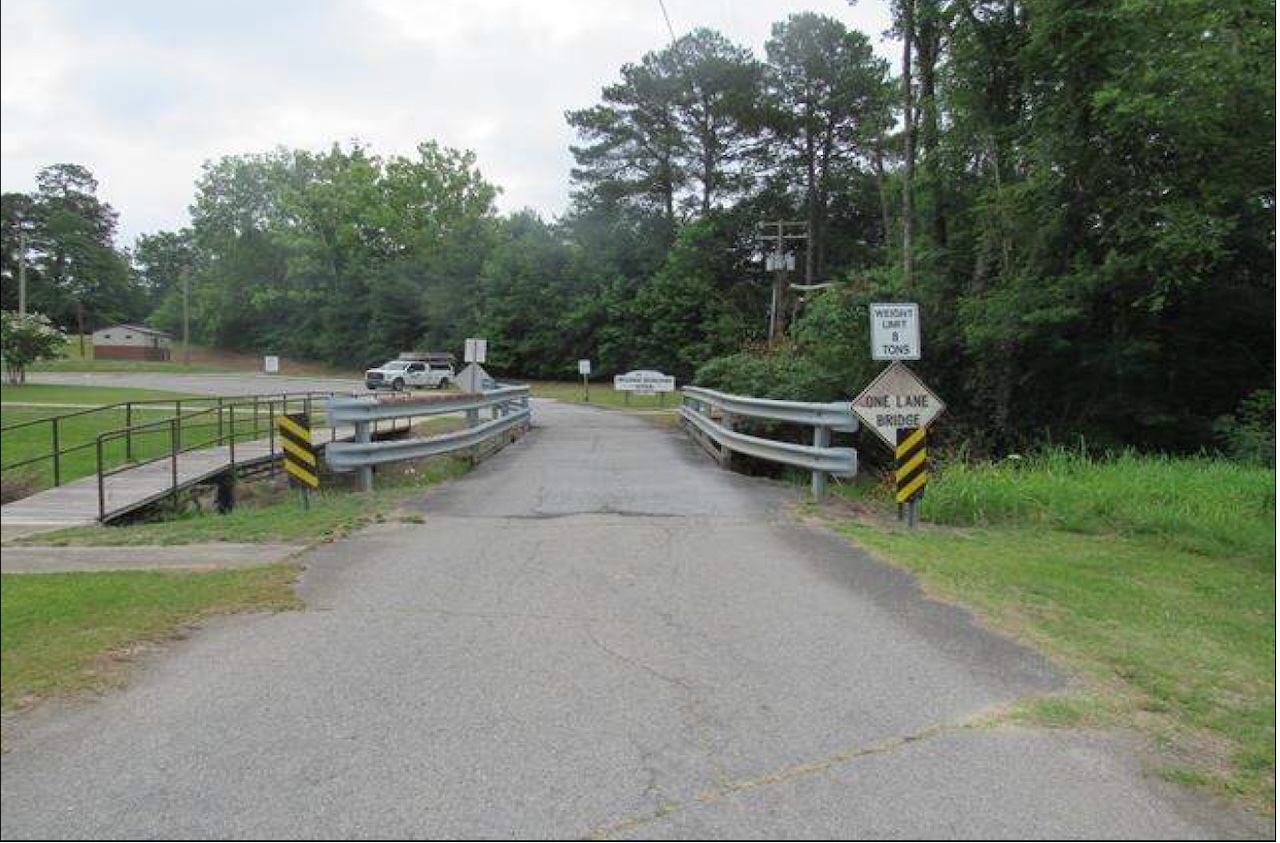
The Roanoke Rapids City Council on Tuesday approved a budget ordinance that will allocate $16,035 for engineering services related to a bridge on Dixie Street that leads to the Chaloner Recreation Center.
Finance Director Carmen Johnson said in a memo to the council that the fee includes the production of repair plans and details, construction documents, bid assistance, and construction inspections. The actual construction costs will be formally estimated under the proposal.
Wetherill Engineering will do the work, which is intended to satisfy North Carolina Department of Transportation and Federal Highway Administration timeline requirements while trying to slow the deterioration rate of the bridge, which currently serves as the only entry and exit point to the recreation center.
The weight limit of the bridge has already been reduced from 8 tons to 5 tons and allows no trucks or buses to traverse the road across a portion of Chockoyotte Creek.
City Manager Kelly Traynham said the first part of the work includes planning and designing the engineering drawings that would address the repair guidelines. The second part would be for the oversight of construction administration. “We don’t know what the cost to repair will be unless we have the plans drawn by the engineering firm.”
Mayor Emery Doughtie asked what would happen if the city decided to make a change so the bridge would be used only for pedestrian traffic, and an easement the city has with the Roanoke Rapids Graded School District were used for vehicle traffic to and from the recreation center. “The only reason that I ask is because I’d hate to see us spend $16,000 and then not know.”
Traynham explained that the easement is currently used during construction and for emergency purposes.
Despite what the mayor estimated would be a $100,000 repair bill, Traynham said a similar project in another community was about $45,000. She added that replacing the bridge would cost about $750,000.
The city manager said there are restrictions on how the city could use the easement. “I recommend that we explore what the repair costs would be through the plans because we are under a timeline with the state to correspond with them. We need to demonstrate we’re moving forward in one way or another, or we have to make that difficult decision about the facility itself.”
NCDOT has stated that the superstructure is in poor condition and there are moderately wide cracks scattered throughout the abutments, along with excessive decay throughout the end bent 1 cap. There is also an area of decay in beam 1 at span 2, and multiple cracks were observed in the beams.