
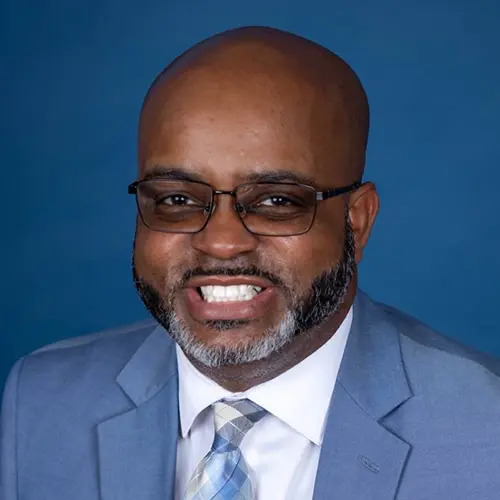
Incumbent House District 27 Representative Rodney D. Pierce is running to retain his seat in Raleigh.
The following are his answers to questions submitted by rrspin:
Please explain your background, professional qualifications, and core reasons for seeking to represent House District 27 in the General Assembly. In modern state and national politics, both major parties encompass distinct philosophies — from populist America First movements to traditional conservatism on the Republican side, and progressive reform to moderate rural representation on the Democratic side. How do you define your governing philosophy within your party, and which leaders or principles best reflect your approach?
I believe my qualifications come from both my experience in the classroom and my experience serving this district. I am a graduate of Halifax County Schools, Halifax Community College and N.C. Wesleyan University. I began my career as a classroom teacher in 2015 and was named HCS Beginning Teacher of the Year in 2018, N.C. Council for the Social Studies TOY in 2019, and an African American Male TOY by N.C. Central University’s Marathon Teaching Institute in 2021. I’ve served on the Governor’s Teacher Advisory Committee, the NC Council for the Social Studies Executive Board, and the Carolina Public Humanities Advisory Board. I currently sit on the Board of Trustees for the Young Democrats of NC and serve on the Roanoke River Basin Bi-State Commission.
I have seen firsthand what it means for rural schools, families and communities to have to do more with fewer resources. I also come to the legislature as a historian and researcher who has worked to preserve the history of Eastern North Carolina, including helping secure historical markers that tell stories that might otherwise be forgotten.
That background shapes how I govern. I see my role as being a voice for rural, working-class North Carolinians and for a part of the state that I often describe as the Neglected Northeast. I want government to be measured by whether it is actually reaching people where they live, not simply by how much money is announced in Raleigh.
My priorities are straightforward: strong public schools, affordable and accessible health care, public safety, clean air and water, reliable infrastructure, economic opportunity and making sure rural communities have a seat at the table when decisions are made about their future.
Some of my colleagues and I want to look into starting a Rural North Carolina Caucus that brings legislators together across party lines around the needs that rural communities share. Rural infrastructure, water and wastewater, health care access, public education, broadband, agriculture, economic development, fire and EMS services and public safety are not partisan problems. Rural communities need legislators willing to work together on practical solutions.
One example of that approach is my Bringing the Capital to the Constituents series. Rather than expecting constituents to always travel to Raleigh to find government, I have worked to bring state officials and agencies directly into the district – including the State Superintendent, Chief State Fire Marshal, State Highway Patrol Commander, and Cabinet-level officials – so people can ask questions and learn what resources are actually available to them. I have also worked to get young people more engaged in civic life through the Eastern NC Civics Bowl, which brings public, private and charter high school students together for a statewide history and civics competition. We will hold the second Civics Bowl in December.
I am proud to be a Democrat, and my Democratic values inform how I approach issues, particularly my belief in strong public education, economic opportunity, access to health care and protecting the ability of working families to participate fully in our democracy. But I do not believe every rural problem has a Democratic or Republican solution. My responsibility is to District 27 first – to listen, work with people across party lines when possible, and make decisions based on what will strengthen the communities I represent.
North Carolina voters face statewide decisions on constitutional amendments referred by the General Assembly, addressing proposals such as lowering the cap on the state individual income tax rate, placing state caps or restrictions on local property tax increases, and establishing photo identification standards for all voting methods. Where do you stand on each of these measures, and how would these fiscal and structural changes affect state services and local county revenues in District 27?
I oppose all three of these proposed constitutional amendments.
On the income-tax amendment, the proposal would change the constitutional maximum income-tax rate from 7% to 3.5%. The General Assembly's fiscal analysis notes that the current personal income-tax rate is already scheduled to fall to 3.49% in 2027 and 2.99% in 2028 if the statutory triggers are met.
My concern is not simply about the tax rate today. It is about putting a permanent limit in the Constitution on the state's ability to respond to future needs. North Carolina has to fund public schools, health care, Medicaid, public safety, roads, water and wastewater infrastructure, disaster recovery and other services. Rural communities like those in District 27 often have greater needs but smaller tax bases with which to meet them.
I believe we should be careful about making permanent constitutional changes that could limit the state's options decades from now. We can debate tax rates through the normal legislative process and adjust them as circumstances change. I do not believe we should lock future legislators and future generations into one approach.
On the property tax amendment, I understand the concern about rising property taxes, but I have a serious concern about asking voters to approve a constitutional restriction when the legislature has not actually told them what the restriction will be.
During this session, legislators from both parties introduced bills dealing with property tax relief for seniors, disabled veterans, others with disabilities, low-income homeowners, etc., but ultimately, the majority, which Republicans enjoy in both the House and Senate, decided not to pass any of them. Now we are being asked to put a constitutional requirement in place first and we’ll figure out the details later. The General Assembly's own fiscal analysis confirms that the amendment does not specify what the levy limit will be; that would be determined by future legislation if the amendment passes.
And the ballot language can give the impression that this means property taxes simply cannot increase. That is not what the amendment says. It requires the legislature to enact limits on increases in the property tax levy, and those laws may contain exceptions. Property taxes could still increase under a levy limit.
I don't think we should ask voters to give Raleigh additional constitutional power over local government without first telling them exactly what we intend to do with that power. Would you give someone more power if they couldn't – or wouldn’t – tell you what they planned to do with it? I think that is a reasonable question for voters to ask.
Furthermore, county commissioners live in the communities they are elected to serve and govern, including on the area of property taxes. They see the challenges firsthand, and their constituents can reach out to them directly. Those closest to the problem are often closest to the solution. I don’t support taking decision-making power away from local elected officials and moving it to Raleigh, where people may have less direct access to those making the decisions.
A rural county with a relatively small tax base, like those in District 27, may have to make a difficult choice between raising revenue, cutting services or delaying infrastructure projects. If Raleigh is going to impose limits, it should also be prepared to address the consequences for the services rural counties provide.
On the voter ID amendment, I support election security, but I opposed changing the Constitution to extend the photo ID requirement to all voting methods. The current constitutional requirement applies to voters voting in person; the proposed amendment would change the constitutional language to require photo identification before voting more broadly.
My concern is making access to the ballot unnecessarily difficult, particularly for rural voters. District 27 includes communities where transportation, distance, work schedules and access to government services can already create barriers. Not everyone has access to a photocopier. We should make it easy for eligible citizens to participate while maintaining appropriate safeguards for election integrity.
I also oppose this amendment because of my grave concern over the fact that the exceptions to providing a photo ID for mail-in ballots will not be enshrined in the state Constitution along with this photo ID requirement. Those exceptions are designed to help voters who are sick, have disabilities, lack transportation, have lost their ID, face religious objections, or are affected by natural disasters. We’re talking about our college students, hospital patients, rest home residents, etc. Those exceptions would still be protected by state law, but they would not be written into the state Constitution, and if this amendment is about making elections more secure, why not protect those same exceptions for voters who need them?
Some people will say this amendment is about preventing voter fraud. But Republican lawmakers have pushed election-related changes in every legislative session since gaining a supermajority in 2013. These proposals covered voter ID, absentee voting, early voting, voter registration, and how elections are run.
The Heritage Foundation’s own database lists 123 proven cases of voter fraud in North Carolina from 1986 through 2025, during a period when nearly 82 million ballots were cast. That puts the scale of documented fraud in perspective.
We should also remember that the Republican-majority State Board of Elections adopted new rules for absentee ballots on the very day those ballots were mailed to voters who had requested them. Voters deserve clear, consistent rules – not changes that create confusion.
Ultimately, all three amendments raise the same broader issue for me: constitutional changes should be approached with a great deal of caution. A statute can be changed when circumstances change. A constitutional amendment is much harder to adjust. Before we permanently restrict the options available to state or local government, we need to be certain we are not creating problems for the communities that will have to live with those restrictions years from now.
Legislative proposals regarding medical cannabis access and the regulation of hemp-derived consumable products have repeatedly sparked debate and stalled in the General Assembly. Do you support legalizing cannabis for medicinal use, full adult recreational use, or neither? What regulatory, tax, or law enforcement framework should North Carolina establish regarding sales and product oversight?
I support legalizing and regulating cannabis for adult use, while also establishing a clear medical-cannabis framework. I am a sponsor of House Bill 413, the “Marijuana Legalization and Reinvestment Act,” which would create a regulated system for cultivation, manufacturing and retail sales, establish licensing and taxation, and address expungement and reinvestment.
I believe regulation is better than leaving consumers, businesses and law enforcement to deal with an inconsistent marketplace. A legal framework should include age restrictions, licensed businesses, independent product testing, accurate labeling, limits on advertising to minors, and clear standards for impaired driving and law enforcement.
The same principle applies to hemp-derived consumable products. Consumers should know what they are buying and how much THC is in a product. We need testing, child-resistant packaging, accurate potency and ingredient labeling, age restrictions and enforcement against products that do not meet established standards.
That is why I think what happened with HB 328 is important. The bill stalled after hemp businesses, workers, consumers and advocates showed up in Raleigh and made their concerns clear. The North Carolina hemp industry says the sector has an estimated $4.4 billion economic impact, with about $3.2 billion in revenue and an estimated $87.8 million in state sales taxes from the retail sector alone. Those are industry figures, but they demonstrate that we are talking about a significant agricultural and business sector, not a small niche.
HB 328 is still technically alive – it was re-referred to House Rules on July 30 – but the House did not take the final vote after the public response. The most powerful lobby in this state is the people, and North Carolinians made their concerns heard in Raleigh. Legislators should listen to consumers, parents, farmers, businesses and law enforcement – not simply whichever industry has the loudest voice.
We also need to pay attention to what is happening just across our border. Virginia has established a regulated adult-use marijuana market, with retail sales beginning July 1, 2027. Virginia's legislative estimates have projected substantial new revenue as that market develops. Earlier state estimates projected approximately $15–19 million in FY2027, $31–39 million in FY2028 and $47–60 million in FY2029 in overall state and local marijuana-related revenue, although those estimates were based on an earlier assumed start date.
More recent Virginia budget reporting puts the first-year state revenue expectation at roughly $51 million, depending on how the final market performs. The point is not that North Carolina should simply copy Virginia. It is that our neighbors are creating a regulated market, establishing product standards and taxation, and capturing revenue from a market that otherwise exists largely outside a regulated framework.
For me, the goal is regulation, accountability and public safety – not legalization for its own sake. If North Carolina is going to allow these products to be sold, we should know what is in them, who is selling them, who is buying them, how consumers are protected and where the tax revenue is going.
Data center recruitment in rural communities has generated debate across northeastern North Carolina. While smaller enterprise facilities offer commercial tax revenue with minimal municipal service demands, residents often voice concerns regarding industrial encroachment on agricultural land and community character. How do you view the role of data center development in District 27’s economic future, and what state economic development guidelines would you support to ensure projects fit the rural character of Halifax, Northampton, and Warren counties?
I am pro-economic development, but I am also pro-community. We need jobs, investment and a stronger tax base, but development has to make sense for the communities that are hosting it.
With data centers, we have to look beyond the tax revenue a project might generate. We need to ask: How much water will it use? How much electricity will it require? Who pays for the additional infrastructure? What happens to nearby farms and residential communities? How much land is being converted? What are the noise, environmental and traffic impacts? And what permanent jobs and other benefits will the community actually receive?
Those are not hypothetical concerns. Legislation considered in Raleigh this session specifically identified the concentrated demands large data centers can place on electric, transmission, distribution and water infrastructure. Other proposals have called for site assessments examining impacts on water resources, agriculture, forestland, historic sites, schools and nearby residences.
For rural North Carolina, I would support clear statewide guidelines combined with meaningful local input. Before a large facility is approved, communities should have reliable information about water consumption, power demand, infrastructure costs, noise, environmental impacts and the amount of agricultural land being converted. Projects using significant public resources should be expected to bear an appropriate share of the infrastructure costs rather than shifting those costs to existing residents and businesses.
I also believe we should prioritize existing industrial sites and areas already served by appropriate infrastructure whenever practical, rather than encouraging unnecessary industrial encroachment into productive farmland or established rural communities.
Most importantly, I don't believe rural economic development should mean that rural communities must choose between growth and protecting their quality of life. We can do both. My standard is simple: if a project is going to use our water, our power, our land and our infrastructure, the people who live here should know what they are getting in return, and they should have a meaningful voice in the process.
Some of the counties in House District 27 have moratoriums on data centers. Perhaps the state should put a statewide pause on approving and permitting new data centers until we have strong protections in place for our communities, utility bills, water, and natural resources. We need to address the unregulated growth of the AI industry and its unknown long-term impacts before allowing more data centers to be built. We should protect North Carolinians first and make sure we understand the costs before moving forward.
Proposals to transfer water out of the Roanoke River basin — such as municipal efforts in rapidly growing areas like Franklin County seeking water from Kerr Lake — have raised significant alarms downstream regarding long-term municipal water supplies, industrial capacity, and environmental preservation along Lake Gaston and the Roanoke River. What is your position on interbasin water transfers out of the Roanoke River basin, and what statutory or regulatory actions will you take in Raleigh to defend the water rights of Halifax, Northampton, and Warren counties?
I support regional cooperation on water, but I do not support treating the Roanoke River basin as an unlimited water source for communities outside the basin. Water is one of the most important economic and public health resources we have, and we have to protect the long-term water security of Halifax, Northampton and Warren counties.
I was also appointed by Gov. Josh Stein to serve on the Roanoke River Basin Bi-State Commission, which gives me an additional responsibility and opportunity to work with North Carolina and Virginia stakeholders on the future of the basin. The Commission's work includes issues involving water quantity and quality, coordination among stakeholders, and identifying and recommending solutions for the basin.
North Carolina already has a regulatory process for interbasin transfers. Generally, new transfers of 2 million gallons per day or more require certification by the Environmental Management Commission, with technical, environmental and public-review requirements.
The Kerr Lake Regional Water System illustrates why we need to pay close attention. Its 2015 certificate authorizes transfers totaling 14.2 million gallons per day from the Roanoke River basin – 10.7 million gallons to the Tar River basin, 1.7 million to Fishing Creek and 1.8 million to the Neuse. The system provides water directly or indirectly to communities across northeastern North Carolina.
I am not against Franklin County, or any other community, having access to a reliable water supply. But regional cooperation has to be based on sound science, long-term water availability, conservation, local input and the cumulative impact of existing and proposed withdrawals. We cannot approve one transfer at a time without looking at the bigger picture.
That is part of why I opposed Section 5 of SB 214. That provision would have allowed Franklin County to acquire, including through condemnation, property or interests in property located in Halifax, Vance and Warren counties without the consent or approval of those counties' boards of commissioners. After the actions of our regional coalition, including our televised press conference, the provision was ultimately removed from the version of SB 214 that became law.
But protecting our water supply also means investing in the systems that deliver water to rural communities. That is why I am developing the RURAL Act – Rural Utility Reliability and Access Legislation. The goal is straightforward: give rural communities a longer-term strategy and the resources they need to maintain reliable water systems instead of waiting until a system fails.
The RURAL Act would focus on 10-year rural water planning, infrastructure modernization, water-loss reduction, emergency assistance when systems experience major failures, and technical assistance for small communities that often lack the engineers and grant-writing capacity needed to compete for state and federal funding. It would also encourage regional partnerships while prioritizing communities with aging infrastructure, limited rate bases and demonstrated need.
Going forward, I would also support strengthening the state's IBT process by requiring greater consideration of cumulative water demand, long-term drought conditions, downstream impacts, existing allocations, agricultural needs, industrial development and the future drinking-water needs of the source basin. Affected local governments and residents deserve meaningful notice and an opportunity to participate before major decisions are made.
Water infrastructure is more than an economic-development issue – it is a public-health, public-safety and affordability issue. Reliable, modern water lines help ensure people have access to clean drinking water without relying on aging and deteriorating pipes; nearby fire hydrants give firefighters access to water without having to bring as much water with them; and adequate hydrant coverage can also affect homeowners' insurance costs, meaning that investing in water infrastructure can ultimately help protect both lives and household budgets.
Protecting the Roanoke River Basin is therefore not just an environmental issue – it is an economic-development issue, a public-health issue and a matter of local control. The RURAL Act is intended to make sure rural North Carolina has the water infrastructure and planning capacity to meet those challenges.
Halifax, Northampton, and Warren counties are rural Tier 1 counties that frequently face steep challenges competing against urban and suburban centers for state funding, infrastructure dollars, and private investment. What specific capital projects, school facility needs, or economic development grants will you champion in the state budget for District 27, and how will you work within legislative leadership to deliver state dollars to our communities?
My approach is to make sure District 27 is at the table when state investments are being made – not an afterthought. Rural communities should not have to compete with much larger urban areas for basic infrastructure, school funding and economic development resources without recognizing the different challenges they face.
One of my biggest priorities is water and wastewater infrastructure. We cannot recruit industry, build housing or grow our communities without reliable water systems. North Carolina already has programs that help rural communities make these investments, including the Rural Infrastructure Program and the Industrial Development Fund–Utility Account, which supports water, wastewater, sewer, industrial access and other infrastructure tied to economic development.
I want to build on those programs through the RURAL Act I mentioned in my earlier answer. Rural communities should not lose out on infrastructure dollars simply because they don't have a large staff to write the application.
We have already seen the value of these investments in District 27. Northampton County received $1.5 million through the Industrial Development Fund–Utility Account for sewer infrastructure at the Northampton County Commerce Park to support additional growth. I want to build on that kind of investment throughout Halifax, Northampton and Warren counties.
Preparing sites, improving infrastructure, supporting small businesses, revitalizing downtowns and connecting people to workforce training are all part of making rural communities competitive for good-paying jobs.
For our schools, I will continue advocating for fairer state investment in public education and school facilities, particularly in rural districts with aging buildings and limited local revenue capacity. I have also sponsored legislation to improve teacher pay and competitiveness, restore professional supports for educators, and provide stronger embedded support for new teachers through HB 1130 “Re-Professionalizing the Teaching Profession,” HB 1178 “NC Teacher Pay Competitiveness Act,” and HB 1209 “Strengthen Ed by Embedded New Teacher Support.”
I also believe we need to treat fire and EMS, health care, broadband and public safety as economic infrastructure. A company considering Halifax, Northampton or Warren County is looking at more than a building and a tax rate. It is looking at whether the community has reliable water, roads, broadband, emergency services, schools and a workforce.
Finally, I will continue working directly with legislative leadership, state agencies and legislators from both parties to bring resources home. My Bringing the Capital to the Constituents initiative is part of that approach – connecting citizens directly with state officials and the programs available to help them.
I cannot promise that every project will receive every dollar requested. But I can promise to show up, make the case for our communities and work to ensure rural North Carolina receives its fair share of state investment.
Access to sustainable healthcare, maternal care, and emergency medical services remains a major hurdle across rural northeastern North Carolina, where hospitals and clinics operate under tight financial margins. What legislative initiatives will you support to preserve local medical facilities, attract healthcare providers, and expand services for elderly and low-income residents in our district?
Access to health care in rural North Carolina is not simply a question of whether a hospital exists. It is also whether we have enough doctors, nurses, nurse practitioners, physician assistants, behavioral health professionals, pharmacists, EMS personnel and other providers to serve the people who live here.
That is why I support a comprehensive rural healthcare workforce strategy focused on recruiting and retaining providers in underserved communities. That should include rural clinical training opportunities, partnerships between hospitals, community colleges and universities, loan repayment and other incentives for providers who practice in rural areas, and programs that help keep those providers in our communities. We also need to strengthen behavioral health services and access to primary and specialty care so people are not forced to travel long distances for basic or preventive treatment.
Maternal care deserves particular attention. The 2026 March of Dimes report underscores the urgency: 18% of North Carolina counties are maternity care deserts, meaning they have no hospital or birth center offering obstetric care and no obstetric clinician. These counties include Northampton and Warren. Another 20% of counties, including Halifax, have low or moderate – not full – access to maternity care. North Carolina continues to have significant gaps in maternity care, particularly in rural communities. I want to advance the MAMA-NC Act – Maternal Access for Mothers and Babies Act, focused on improving maternal and infant health in rural communities by strengthening access to prenatal care, maternity providers, transportation, emergency services and other supports mothers and babies need before, during and after pregnancy.
We also need to take prevention seriously. Northampton County is a good example. According to the latest preliminary NC cancer-incidence data, Northampton's prostate cancer incidence rate for 2020–2024 was second statewide at 187.2 cases per 100,000, compared with 135.4 statewide. I previously introduced HB 128, the Establish Prostate Cancer Control Program, and I intend to reintroduce that legislation while working more closely with NCDHHS and other entities. The goal is to improve awareness, screening, early detection and access to treatment for prostate cancer, particularly in communities where the burden is higher.
I also want to look at the sustainability of rural hospitals and other community medical facilities. Rural hospitals often operate with much smaller patient populations and tighter financial margins than large urban systems. We need to make sure state policy does not unintentionally accelerate the loss of local services. That means looking at sustainable reimbursement, telehealth, rural health clinics, community health centers, behavioral health and partnerships that allow smaller facilities to maintain services locally.
I am also disappointed that, under the State Health Plan's new four-tier provider network taking effect January 1, 2027, no hospital in northeastern North Carolina was selected as a Preferred Provider. The four tiers are Preferred, which generally has the lowest out-of-pocket costs; Access, which is intended to preserve access in areas with fewer provider choices and generally maintains current benefit levels; Non-Preferred, which generally costs members more; and Out-of-Network, which provides the least favorable coverage. For residents of District 27, that raises a practical concern: the closest Preferred hospital is Nash General in Rocky Mount, meaning some state employees and retirees will have to travel farther to receive care at the Preferred tier.
I am also working with ECU Health on the hospital wage index issue, because rural hospitals need a fairer reimbursement structure to compete for healthcare workers and sustain services in Eastern North Carolina. These issues are connected: we need to make sure rural hospitals have the workforce and financial resources to remain strong while also making sure patients – including state employees and retirees – can access care close to home.
A recent study in JAMA Health Forum reinforces why this must be approached as an infrastructure issue. Researchers examined 41 states and found that nearly 946,000 rural residents lived in areas with limited ambulance and healthcare access but had sufficient broadband to support telehealth, while more than 649,000 rural residents lived where all three problems overlapped: limited broadband, limited ambulance access and limited health-care access. North Carolina was among the 10 states with the largest numbers of rural residents in both categories.
That research supports something I have been saying about rural infrastructure more broadly: broadband, health care and emergency services cannot be treated as separate issues. If someone is more than 30 minutes from a health-care facility or more than 25 minutes from an ambulance station, telehealth can help – but only if that person has reliable broadband and a provider on the other end.
That is why my rural legislative agenda includes strengthening fire and EMS, 911 capacity, broadband infrastructure and rural health-care access together. We also need to recognize what I would call public-safety and health-care deserts – perhaps not as formal state designations, but as real challenges when people have to travel long distances for emergency or routine care.
For elderly and low-income residents, I would support expanding access to community-based services that allow people to remain in their communities when possible, including primary care, behavioral health, transportation, home- and community-based services and assistance connecting residents to programs for which they qualify.
Ultimately, my goal is not simply to keep a hospital building open. It is to build a rural health-care system that can recruit providers, sustain local facilities, prevent disease, respond to emergencies and use technology to bring specialized care closer to people.
For District 27, health care is economic infrastructure, public-safety infrastructure and quality-of-life infrastructure. If we want rural communities to grow and remain strong, people have to be able to receive the care they need without having to leave their communities to get it.
Looking at the shared and distinct needs across Halifax, Northampton, and Warren counties, what do you view as the single most urgent issue facing the citizens of House District 27, and what specific legislation will you introduce or co-sponsor during your first legislative session to address it?
If I had to identify one overarching issue facing House District 27, it would be access to opportunity and the capacity of rural communities to provide the basic services their people need. That connects nearly every challenge we face in Halifax, Northampton and Warren counties. It affects whether a child has a strong public school, whether a family can see a doctor, whether a business can create jobs, whether a fire department can respond to an emergency and whether a community has reliable water and infrastructure.
That is why one of my goals for the 2027 session is to help build a Rural North Carolina Caucus that brings legislators together across party lines around the issues rural communities share. The purpose would not be to create another partisan organization. It would be to develop a practical rural legislative agenda and work with members of both parties to get those priorities across the finish line.
The first piece would be the RURAL Act because rural water systems need more than emergency fixes. I want to establish long-term planning, modernization, water-loss reduction, emergency assistance when systems fail and technical assistance for small communities that often lack the engineers and grant writers needed to compete for state and federal funding.
Water infrastructure is also public health, public safety and affordability. Modern water systems help provide clean, reliable drinking water; adequate water pressure and nearby hydrants help firefighters respond without having to transport as much water; and adequate fire protection infrastructure can affect homeowners' insurance costs.
The second pillar would be rural health care and workforce development. I want to pursue legislation to recruit and retain doctors, nurses, nurse practitioners, physician assistants, pharmacists and behavioral health professionals in rural communities. That means rural clinical-training pipelines, partnerships with community colleges and universities, loan-repayment and other incentives, and policies designed to keep providers here after they complete their training.
That agenda would also include the MAMA-NC Act, maternal and infant health initiatives, strengthening rural EMS and access to rural hospitals and clinics. I intend to reintroduce my prostate-cancer legislation as well, because rural health policy must include prevention and early detection – not simply treatment after people become seriously ill.
A third priority is rural public safety. I want to establish the Rural Violent Crime Task Force I have already proposed, bringing legislators, law enforcement and other stakeholders together to examine the particular challenges facing rural communities. I also want to address rural law-enforcement staffing, fire and EMS capacity, 911 services and reentry. That includes legislation to provide at least one year of funding for local reentry councils so communities have a consistent way to help people returning from incarceration successfully reenter society.
Education will remain a central part of the agenda. I have already introduced legislation dealing with teacher pay competitiveness, re-professionalizing teaching and embedded support for new teachers. In 2027, I want to continue making the case that rural schools need the resources to recruit and retain qualified educators and maintain safe, modern school facilities.
The fourth piece is economic mobility. Rural economic development cannot simply mean announcing a new project. People need transportation to jobs, broadband to participate in the modern economy, workforce training that connects them to actual employment opportunities, and small businesses that can grow. I want to continue pursuing workforce development and microcredential opportunities, industrial-site readiness and other investments that help people build careers without having to leave their communities.
Finally, I want the Rural Caucus to address something that is often overlooked: government capacity. A small town may know exactly what infrastructure it needs but not have an engineer, grant writer or staff member available to compete for the money. Part of the rural agenda should be expanding on the programs already available that help communities plan projects, apply for grants and manage the investments once they receive them.
I don't believe rural North Carolina needs to choose between growth and quality of life. We need water systems that can support growth, schools that prepare our children for opportunity, healthcare providers who are here when people need them, public safety agencies that have the resources to respond, and infrastructure that allows businesses and families to thrive.
So, my priority for District 27 is not one isolated project. It is building rural capacity. Through the Rural North Carolina Caucus, I want to bring legislators from both parties together around a practical agenda for water and infrastructure, health care, education, public safety and economic mobility – and then work with legislative leadership and state agencies to turn those priorities into legislation and investments for communities like Halifax, Northampton and Warren counties.
I am grateful to have earned the support of Governor Josh Stein, former U.S. Congresswoman Eva Clayton, former U.S. Congressman G.K. Butterfield, environmental justice activist Dollie Burwell, and a host of former state legislators along with local elected officials. I’m also thankful for the endorsement of the North Carolina State AFL-CIO, North Carolina League of Conservation Voters, North Carolina Association of Educators, Young Democrats of North Carolina, Planned Parenthood Votes! South Atlantic, Carolina Forward, Communication Workers of America PAC, Advance Carolina, NC NOW PAC, and other organizations representing working people, educators, environmental advocates and communities across North Carolina.
More information can be found at piercefornc.com and district27facts.com