


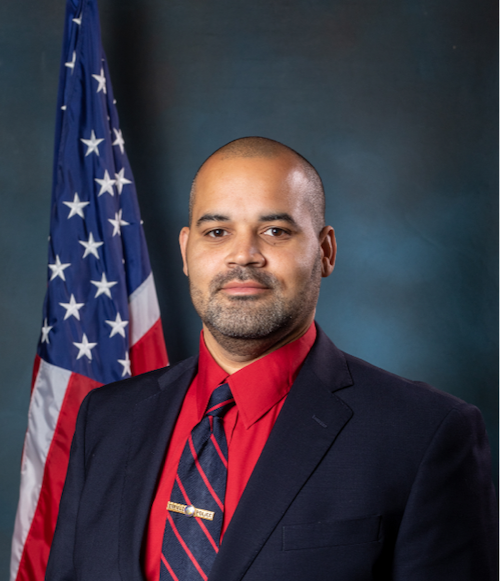
Halifax County Sheriff Tyree Davis is running for re-election.
The following are his answers to questions submitted by rrspin:
One of the central issues in this race is experience and training. Please explain in detail why you are qualified to lead the Halifax County Sheriff’s Office, including your law enforcement certifications, educational background, administrative or budgetary experience, and track record in executive leadership.
I have been a law enforcement officer for 23 plus years. I have been the Sheriff for over four years, before then I was City Manager for around a year and a half and Police Chief for five years prior to that. I have been a law enforcement executive for the past 11 years and I have been successful. I have proven leadership, results and have proven that I have what it takes to be the Elected Sheriff and be successful. I am the only Sheriff candidate in this election that has been a certified law enforcement officer. My qualifications to lead the Halifax County Sheriff's Office are built on more than two decades of law enforcement experience, professional training, higher education, and executive leadership. I began my law enforcement career with the Halifax County Sheriff's Office in 2003, and my career has included patrol, criminal investigations, narcotics enforcement, supervision, police administration, and county government leadership.
Over the years I have accumulated thousands upon thousands upon thousands of hours of law enforcement and or law enforcement/ leadership training. I began as a patrol deputy with the Halifax County Sheriff's Office and advanced through the ranks, serving as a corporal, narcotics investigator, and detective sergeant in criminal investigations. Those positions gave me direct experience in responding to calls, investigating crimes, and addressing the challenges facing our communities.
I later served as captain and chief of police for the Town of Enfield. As police chief, I focused on proactive enforcement, improving community relationships, addressing drug and gang activity, and strengthening cooperation with neighboring agencies. As sheriff, I also helped establish the Halifax Regional Drug and Gang Task Force to improve coordination in addressing illegal drugs gangs, illegal guns and criminal activity throughout Halifax County.
My documented law enforcement credentials include North Carolina General, Basic, Intermediate, and Advanced Law Enforcement certifications, along with advanced law enforcement certification through the state's sheriff's training and standards and NC Criminal Justice and Training Commission. My additional training has included criminal justice organization management, command and control, criminal procedure, and school safety and preparedness. More than 16 years ago in 2010, the North Carolina Attorney General recognized me as an “Elite” Law Enforcement Officer in the State of NC.
I hold a Bachelor's Degree in Criminal Justice from Kaplan University, graduating Magna Cum Laude, and a Master's Degree in Public Administration from Capella University.
In addition, I completed city and county management certification through the UNC School of Government and management training through numerous community colleges and at the FBI Academy. This combination of criminal justice education, public administration, technology knowledge, and management training provides a foundation for understanding both the operational and administrative responsibilities of the Sheriff's Office.
Leadership of a Sheriff's Office requires more than law enforcement experience. It requires managing personnel, developing policies, allocating resources, evaluating performance, and making difficult decisions about competing operational priorities.
As a city manager I was responsible for creating and maintaining an entire city budget. I graduated from UNC’s School of Government with a certification to run and manage an entire city or county, no matter the size. My experience as a police chief and in municipal administration has involved personnel management, operational planning, budgeting, policy development, and coordinating services. My background in business management has also included hiring and training employees, scheduling, inventory control, budgeting, and supervising staff.
I understand that public funds must be managed responsibly. As Sheriff, I believe budget decisions should be tied to measurable public-safety needs, including staffing, detention operations, vehicles, training, equipment, investigations, and school safety. I would continue working with county commissioners and finance staff to identify priorities, evaluate expenditures, pursue eligible grants, and ensure that public resources are used effectively.
Throughout my career, I have emphasized proactive law enforcement, strong working relationships with other agencies, and community engagement. My experience leading a police department and serving in municipal administration taught me the importance of setting expectations, developing employees, communicating with the public, and working collaboratively to solve problems.
I believe a Sheriff must be able to hold criminals and deputies accountable while also building trust with residents, supporting deputies, protecting children, and maintaining professional standards. Those responsibilities require consistent leadership, sound judgment, integrity, and the willingness to be accountable for results. My goal is to continue building a sheriff's office that is professional, proactive, respected, well-trained, fiscally responsible, and responsive to the needs of Halifax County.
My qualifications reflect a combination of hands-on law enforcement, investigative and supervisory experience, advanced education, professional certifications, and executive management. I have worked in this county, served its citizens, and developed relationships with law enforcement and community partners over many years.
I believe that experience matters because the Sheriff must understand both the realities facing deputies on the street and the administrative responsibilities required to run an effective office. My commitment is to use that experience to protect our citizens, support our employees, manage public resources responsibly, and continually improve the services provided by the Halifax County Sheriff's Office.
There has been ongoing debate both nationwide and locally regarding Automated License Plate Readers such as the Flock Safety system. What is your assessment of these systems, and do you believe their use should continue, expand, or be discontinued in Halifax County? How do you balance their investigative benefits against public privacy concerns, and what specific audit policies will you enforce to prevent and address potential officer or staff abuse?
Flock is a system that has recently started being used by our office. One important point deserves emphasis. Flock Safety has helped our office and law enforcement agencies across the country investigate crimes, recover stolen vehicles, and locate missing people. These are real public-safety applications.
I would support continuing the use of Flock for legitimate law-enforcement purposes, with safeguards. Rather than automatically expanding the system or discontinuing a potentially useful tool without first examining its local results. The guiding principle is straightforward. Any tool used correctly can be beneficial, and any tool used incorrectly can cause harm.
Consider Facebook, it was designed to connect people, share information, and help communities communicate. People use it to find missing loved ones, share emergency alerts, and help law enforcement gather information. However, people can also use it to spread misinformation, harass others, invade privacy, or commit fraud. We don't judge the entire platform solely by its best use or its worst misuse. We consider its benefits, risks, rules, and accountability.
The same principle applies to Flock. A camera that helps locate a kidnapped child or recover a stolen vehicle can serve a meaningful public-safety purpose. An officer who uses that same camera system to track a former partner, neighbor, or person of personal interest is abusing a public resource. The answer is to preserve legitimate uses while making improper uses detectable and subject to consequences. Public safety and personal privacy should not be treated as mutually exclusive goals. Halifax County residents deserve effective law enforcement, and they also deserve confidence that surveillance technology will not be used against them improperly. My standard would be simple: use the technology when it demonstrably helps protect people, establish boundaries on how it can be used, audit those boundaries, and hold anyone who abuses the system accountable. That approach recognizes both the real benefits technology can provide and the responsibility the government has to protect the people it serves.
What is your policy regarding take-home patrol vehicles for deputies and command staff who reside outside Halifax County? Please elaborate on how you balance out-of-county vehicle privileges between recruitment and retention needs, emergency call-back response times, and taxpayer costs such as fuel and vehicle maintenance.
Take-home patrol vehicles should remain an important recruitment and retention benefit for Halifax County deputies and command staff, including qualified employees who live outside the county. We want to recruit and retain the best deputies possible, and I do not believe qualified candidates should be excluded simply because their homes are across the county line.
Having served in law enforcement since 2003, I recognize that take-home vehicles and out-of-county take-home arrangements are not new concepts. They have been part of law-enforcement operations for decades. Agencies do differ in their eligibility rules, geographic limits, and permitted uses, so I would not claim that every agency offers the same benefit. However, take-home vehicles are an established practice in American policing, and many departments identify them as a valuable recruitment and retention incentive.
Our objective should be to recruit the best deputies, not just the deputies who happen to live within Halifax County. A candidate's qualifications, integrity, experience, and ability to serve should be central considerations. An automatic residency restriction could unnecessarily narrow the pool of candidates without necessarily improving response times or reducing costs.
I believe Halifax County should maintain a take-home vehicle program that helps us compete for qualified personnel, retain experienced deputies, and respond effectively to emergencies. We should hire the best people for the job, even when they live outside our county.
What do you see as the top three needs facing the Halifax County Sheriff’s Office today, and how do you plan to address or fund them within the county’s fiscal realities?
I see three priorities for the Halifax County Sheriff's Office: recruiting and retaining qualified deputies, keeping deputies available to respond to calls, and investing in effective law enforcement while maintaining public trust. Each must be addressed with a realistic plan for funding, measurable results, and accountability to taxpayers.
The county's recent budget discussions make this especially important. Halifax County's proposed FY 2026–27 budget included additional compensation for law enforcement and detention personnel, as well as a pilot program to outsource certain involuntary mental-health transports so deputies can remain available for calls for service. Those are concrete examples of how staffing and operational needs affect public safety and the budget. From the Sheriff down, a Sheriff's Office is only as effective as the people serving in it. We need qualified deputies who are properly trained, equipped, supported, and compensated competitively.
My plan would be to review compensation regularly against comparable law enforcement agencies to identify gaps that make it difficult to recruit or retain qualified personnel. Ask the county commissioners to strengthen retention incentives, including career development, specialized certifications, leadership opportunities, and appropriate recognition for experience. Maintain practical benefits, including take-home vehicles for eligible personnel. Improve recruitment and training, with clear hiring standards, timely background investigations, and mentoring for new deputies.
Funding would start with a review of existing personnel expenditures, vacancies, overtime, and turnover costs. I would work with county commissioners to prioritize compensation adjustments that can be sustained over multiple budget years rather than promise raises the county cannot afford. I would also pursue eligible state and federal grants for training and recruitment.
Halifax County has already made employee compensation and retention a budget priority, including a law enforcement and detention officer pay increase approved in January 2026. The next step is to measure whether current compensation changes are reducing vacancies and turnover. And, I can already tell you that our detention has one opening but we are already processing applications to fill that spot with at least 18 applications on file. The Deputy side has 4 openings with at least two people starting on Nov. 1st. We are almost fully staffed.
Residents need deputies available to answer calls, investigate crimes, patrol neighborhoods, and respond to emergencies throughout the county and not be tied up unnecessarily with lengthy transports.
My priorities would include reviewing staffing by shift and geographic area to identify coverage gaps and make the best use of available personnel and technology to reduce unnecessary time away from patrol. The county's proposed FY 2026–27 budget included a pilot to contract certain involuntary mental-health transports to a private provider, allowing deputies to remain available for calls. As law enforcement officials we should use technology responsibly to help investigators identify leads, recover stolen property, and locate missing people, with appropriate policies, oversight and audits.
Deputies need reliable vehicles, communications equipment, training, investigative tools, and policies that protect both the public and the officers doing the job. Essential equipment is prioritized. We should replace vehicles and equipment based on condition, reliability, safety, and lifecycle cost. We should invest in training and accountability. I will continue to maintain professional standards for use of force, evidence handling, technology access, and interactions with the public.
Build community confidence - Communicate regularly with residents, listen to concerns, and publish meaningful performance information while protecting confidential investigations and personal information.
I would continue to pursue grants when the Sheriff's Office qualifies, regional purchasing agreements where they offer savings, and partnerships with other agencies for training and specialized resources. Grants should supplement a sustainable budget; not create recurring expenses the county cannot afford once grant funding ends. In 2026 alone, the Sheriff’s Office has applied for over $2 million dollars in grants and acquisitions and received almost 1.7 million dollars in grants and acquisitions. My commitment is to make public safety the priority while respecting the taxpayers who fund it.
With planning underway for the new Halifax County Detention Center, would you advocate for county commissioners to fund and construct a new sheriff’s administrative and operations building on the grounds of the new detention facility? Why or why not?
Yes. I would continue to advocate for Halifax County commissioners to fund and construct a new Sheriff's Office on the grounds of the new Halifax County Detention Center.
The current Detention Center and the Sheriff's Office were originally built together to serve the needs of our county. Over the years, the demands on law enforcement have increased, and we have outgrown both facilities. For more than 25 years in Halifax County the elected sheriffs have requested an expansion of the existing Sheriff's Office or the construction of a new facility to accommodate that growth and the changing needs of the agency.
With planning already underway for a new detention center, we have an opportunity to address both long-standing needs together. It would not be financially responsible to build one facility while postponing the other when both are necessary to meet current and future public-safety needs. These are not simply projects we want. They are facilities we need to properly serve the citizens of Halifax County.
Building the detention center now and attempting to add a Sheriff's Office later could mean additional construction mobilization costs, site work, utility modifications, and disruptions to an operating facility. Likewise, constructing a separate Sheriff's Office in the future could require the county to duplicate infrastructure and incur additional land, design, and construction expenses.
I believe the county commissioners should fully evaluate the costs of constructing both facilities together against the long-term costs of building them separately. That evaluation should include projected staffing needs, operational efficiencies, future expansion, and the total cost over the life of each building. We must be good stewards of taxpayer dollars and make decisions based on needs and costs.
My position is simple, plan for the county's needs today and for the next 10, 15, 25 years, rather than build a facility that we may outgrow before the investment has been fully realized. I would work with county commissioners, architects, financial planners, and the public to develop a comprehensive plan that addresses both facilities, establishes realistic costs, and protects taxpayers from avoidable future expenses.
The planned detention center will significantly alter daily operations compared to the existing facility. What will your projected staffing and detention officer needs be, and what specific strategies will you implement to recruit, train, and retain qualified detention staff?
We have met with other Sheriffs and toured their facilities that are close to the size we are looking to build. We have also spoken with them about the number of personnel needed to safely work in the facility. A new detention center will only be successful if we have enough qualified detention officers to operate it safely, securely, and efficiently around the clock. My approach would be to plan staffing alongside the facility's design, rather than wait until construction is complete and then try to fill vacancies.
My priorities would be safe staffing levels, competitive recruitment, thorough training, and retaining experienced detention officers. We must also be realistic about Halifax County's budget and ensure that staffing projections reflect the facility's actual capacity, layout, security technology, and operational requirements.
Recruitment: We must make detention work a career that qualified people want to pursue. I would work with county commissioners and Human Resources to review salaries and benefits against comparable agencies, streamline hiring without compromising background investigations, and recruit through community colleges, career fairs, social media and local workforce organizations.
Training: Every detention officer must receive the required North Carolina training and certification, along with thorough instruction in de-escalation, inmate classification, suicide prevention, mental-health awareness, emergency response, report writing, and professional conduct. Supervisors must receive additional leadership and incident-management training. Training should continue throughout an employee's career, not end after initial certification.
Retention: Recruiting employees is only half the challenge. We must give them reasons to stay. I would meet individually and collectively with detention staff to understand their concerns, review scheduling and overtime practices, and establish mentoring opportunities. I would also work with county leadership to pursue competitive compensation and opportunities for continuing education.
Funding and accountability: I would present commissioners with a phased staffing plan showing the number of positions required for opening, the cost of salaries and benefits, the training and equipment expenses, and the projected costs as the facility reaches full operation. I would pursue eligible grants and training partnerships while recognizing that permanent staffing requires a dependable, recurring funding source. I would monitor vacancies, turnover, overtime, training completion, safety incidents, and compliance with minimum staffing requirements.
My goal is to open the new detention center with the personnel, training, and leadership needed to operate it safely and not to open a larger building and hope we can find enough employees afterward. Our detention officers perform demanding and essential work, and they deserve the staffing support, preparation, and professional respect necessary to do that work well. Ultimately, responsible planning protects detention staff, the people in our custody, the public, and the taxpayers of Halifax County.
On March 20, 2025, 66-year-old Arnette Richardson was attacked by another inmate inside the Halifax County Detention Center and subsequently died from complications of multiple blunt force trauma at ECU Health in Greenville. State medical examiner findings noted that Richardson had low-level Alzheimer’s disease. With the construction of a new jail on the horizon, what specific protocols regarding inmate intake classification, mental health screenings, cellmate compatibility, and surveillance rounds must be implemented to prevent similar tragedies?
With the construction of a new Halifax County Detention Center on the horizon, we have an opportunity to ensure that our facility, staffing, and procedures meet the needs of the people in our custody and the employees responsible for their safety. Preventing in-custody tragedies requires established policies, consistent supervision, properly trained personnel, and a facility designed to safely accommodate the number of inmates housed.
The rules and procedures for operating a safe detention facility already exist. The challenge is ensuring we have a facility large enough, properly designed, and adequately staffed to carry them out. A detention center that is overcrowded or lacks appropriate housing options can make it more difficult to separate incompatible inmates, monitor individuals at risk, and provide timely medical and mental-health care.
My priorities would include a thorough intake and classification procedures. Every person entering the detention center should undergo an intake assessment that identifies immediate medical needs, potential safety concerns, prior incidents of violence, vulnerability to victimization, and other factors affecting appropriate housing. Classification decisions must be documented and reassessed whenever new information or changing behavior warrants it.
Mental-health and suicide-risk screenings- Every inmate should receive an initial screening for mental-health concerns, suicidal thoughts, substance withdrawal, and urgent medical conditions. Staff must be trained to recognize warning signs, initiate appropriate observation precautions, and promptly refer individuals for qualified medical or mental-health evaluation. Screening should not be treated as a one-time task; reassessment is essential when an inmate's behavior, condition, or circumstances change.
Cellmate compatibility and appropriate housing- Inmates should not be housed together solely because space is available. Classification staff must consider known conflicts, violence risks, vulnerability, medical and mental-health needs, age where relevant, and other documented compatibility concerns. The facility must provide enough appropriate housing options to separate inmates when necessary.
Surveillance, security rounds, and supervisory accountability. The detention center should have clearly written observation and security-round requirements based on each inmate's assessed risk and applicable standards. Staff must document required checks accurately, supervisors must verify compliance, and cameras and electronic monitoring should supplement, not replace, direct observation by detention officers. Missed checks, equipment failures, and deviations from required observation schedules must be addressed promptly. Emergency response procedures should be practiced regularly.
A facility designed for actual operational needs- A new detention center must be designed around projected inmate population, appropriate housing classifications, medical and mental-health services, staffing requirements, secure observation areas, and the ability to separate individuals when circumstances demand it. Capacity should not be measured simply by how many beds can fit inside a building. It must reflect whether the facility can safely house and supervise the population it is expected to serve.
The county must also ensure adequate staffing on every shift. Even well-written policies cannot protect inmates if detention officers are stretched too thin to complete required rounds, respond to emergencies, or monitor individuals who need additional supervision.
My commitment is to make sure we have the right facility, the right number of trained employees, and consistent enforcement of the rules already in place. No facility can eliminate every risk, but proper design, adequate capacity, appropriate classification, timely medical care, reliable supervision, and accountability can help prevent avoidable tragedies and protect both inmates and the employees entrusted with their care.
Illicit narcotics, particularly fentanyl, continue to drive property crime and violent offenses across the Roanoke Valley. What is your proactive strategy for narcotics interdiction, and how closely will your office coordinate with municipal police departments and state or federal task forces?
Illicit narcotics, particularly fentanyl, remain a serious threat to our communities. The drug trade fuels addiction, contributes to overdoses, and can be connected to property crimes, violent offenses, and gang activity. Addressing this problem requires proactive enforcement, strong investigative capabilities, and close cooperation among law enforcement agencies at every level. Over the past 4 years I have more sworn taskforce officers at the Sheriff’s Office than we have ever had. These task force officers are employed by the sheriffs office and work hand and hand with our local, state and federal law enforcement partners in an effort to reduce illegal drug, illegal gun and gang violence in Halifax County.
Throughout my career in law enforcement, I have believed that criminals do not recognize jurisdictional boundaries, and neither should our efforts to stop them.
I helped create the Halifax Regional Drug and Gang Task Force because I recognized that agencies working together could accomplish far more than any one department working alone. As a police chief and now as Sheriff, I have continued to build relationships with local, state, and federal law enforcement agencies to identify and pursue drug dealers, gang members, and other individuals who threaten the safety of our communities.
Those relationships were not built overnight. They came through years of working together, sharing information, coordinating investigations, and establishing mutual trust and respect. Today, I have strong working relationships with law enforcement agencies throughout Halifax County and across North Carolina. I understand the importance of those partnerships because I have spent my career building and maintaining them.
My proactive strategy would focus on several key areas and strengthen regional narcotics enforcement. I would continue working closely with municipal police departments throughout Halifax County, the North Carolina State Bureau of Investigation, the State Highway Patrol, and appropriate federal partners. Through coordinated investigations and task-force operations, we can share intelligence, combine resources, and pursue drug distribution networks that operate across jurisdictional lines.
Target drug dealers and distribution networks- Our efforts must go beyond arresting individuals struggling with addiction. We must investigate those who distribute fentanyl and other dangerous drugs, identify the networks supplying our communities, and use lawful investigative methods to hold those responsible accountable.
Improve intelligence sharing and coordination- Timely communication among agencies helps investigators recognize connections between cases, identify repeat offenders, and avoid duplicating efforts. I would continue strengthening these relationships through regular coordination, information sharing consistent with the law, and joint investigative initiatives.
Address fentanyl overdoses and protect our communities- Enforcement must be paired with overdose prevention, coordination with emergency medical services, and partnerships with treatment and recovery providers. When appropriate, we should use available investigative information to identify the source of dangerous drugs and prevent further harm.
Make responsible use of resources- Narcotics investigations can be time-consuming and expensive. By coordinating with other agencies and task forces, we can share expertise, training, equipment, and investigative resources rather than requiring every department to operate independently. I would pursue eligible grant funding and measure success through meaningful outcomes, including disrupted distribution networks, seizures, successful prosecutions, and reductions in drug-related harm.
I also recognize that effective regional enforcement depends on trust. Agencies must know that their partners will communicate honestly, follow through on commitments, protect sensitive information, and work toward common goals. That trust comes from experience and consistent cooperation.
My commitment is to continue building on the partnerships I helped establish and have strengthened throughout my career. As police chief, I saw the value of regional cooperation firsthand. As Sheriff, I have continued those efforts and maintained strong working relationships with local agencies and law enforcement partners across the state.
We cannot solve the narcotics problem by ourselves, and we should not try to. By working together, sharing information, and targeting those who bring dangerous drugs into our communities, we can make better use of our resources and hold offenders accountable while protecting the citizens of Halifax County and the greater Roanoke Valley.
School safety remains a vital concern for families throughout Halifax County. Are you satisfied with current School Resource Officer coverage and training across county campuses, and what adjustments, if any, will you make to enhance school safety protocols?
No, I am not completely satisfied with the current School Resource Officer (SRO) coverage because my goal is to have an SRO in every school throughout Halifax County. I will not be satisfied until we have done everything reasonably possible to protect our children, teachers, and school staff members.
Our current School Resource Officers do an amazing job serving our schools. They build relationships with students, work closely with teachers and administrators, help address safety concerns, and serve as trusted, positive role models for young people. I appreciate the dedication and professionalism they bring to this important responsibility. The goal is not to diminish the work they are doing, but to build on their success and provide more consistent coverage across the county.
I believe SROs play a vital role in school safety. They are not just there to respond when something goes wrong. They can help prevent problems by developing relationships with students, recognizing potential concerns, educating young people about the consequences of their decisions, and working with school personnel to address threats before they escalate.
I would also continue supporting regular SRO training in areas such as emergency response, threat assessment, de-escalation, youth interactions, and coordination with school staff and emergency responders. School safety plans should be reviewed and practiced regularly, and communication among the Sheriff's Office, school system, fire and rescue personnel, police departments and other emergency partners must remain strong.
Our children deserve to feel safe at school, and parents deserve confidence that we are taking their safety seriously. I am proud of the SROs currently serving Halifax County, and I want to ensure that every school has the support and protection these dedicated professionals can provide. My commitment is to keep working toward that goal until every campus has appropriate SRO coverage and a comprehensive school safety plan.
What new operational, community policing, or youth-oriented initiatives will the public see under your leadership, and which existing programs or community partnerships do you consider essential to continue?
My leadership philosophy is simple: a Sheriff must be tough on crime, hold criminals accountable, and be actively involved in the community he or she serves. I believe you can do both, and throughout my career in law enforcement, I have worked to do exactly that.
As Sheriff, I understand that our responsibility goes beyond answering calls, making arrests, and investigating crimes. We must also build relationships with our residents, support our schools, invest in our youth, and work alongside community organizations to make Halifax County a safer place to live, work, and raise a family.
Public safety and accountability will remain a priority. I will continue to focus on identifying and apprehending those who commit crimes, disrupting drug distribution and gang activity, and working with prosecutors and our law enforcement partners to hold offenders accountable. Our citizens deserve to know that criminal activity will be taken seriously and that their Sheriff's Office will work diligently to protect them.
At the same time, I believe a good Sheriff must be visible and engaged in the community. I have always believed that building trust requires more than wearing a badge. It means showing up, listening to residents, supporting community events, working with local organizations, and being present where our children learn and grow.
Under my leadership, I will continue supporting and strengthening initiatives that connect deputies with young people, including school safety efforts, positive interactions between law enforcement and students, youth outreach, and opportunities for children to see law enforcement officers as people they can trust and approach for help.
Our School Resource Officers are an important part of that effort. They do an amazing job building relationships with students and school staff while helping protect our campuses. I will continue working toward my goal of having an SRO in every school in Halifax County, while supporting the training and resources necessary for them to succeed.
I also consider our partnerships with municipal police departments, schools, community organizations, faith-based groups, and other local, state, and federal agencies essential. Strong partnerships help us address crime more effectively, respond to community concerns, and create opportunities for young people. These relationships take time, commitment, and trust to build, and I intend to continue investing in them.
I will always look for opportunities to expand youth engagement, strengthen community outreach, improve communication between the Sheriff's Office and residents, and evaluate existing programs to determine what is working and where we can do better. I want our office to be accessible and responsive, and I want residents to feel comfortable bringing concerns to us.
I believe I can be an effective Sheriff in the fight against crime while also being a Sheriff who cares deeply about the people of Halifax County. Holding criminals accountable and supporting our children, schools, and communities are not competing responsibilities. They are both essential to building a safer future.
My commitment is to continue doing the work, remain visible in our communities, support our deputies, encourage our young people, and make decisions that put the safety and well-being of Halifax County residents first.